
Stranger stop and wish me well,
Just say a prayer for my soul in hell.
I was a good fellow, most people said
Betrayed by a woman dressed in all red.
~ Unknown, Famous Alleyway Poem Found Next To
Where John Dillinger Was Shot & Killed.
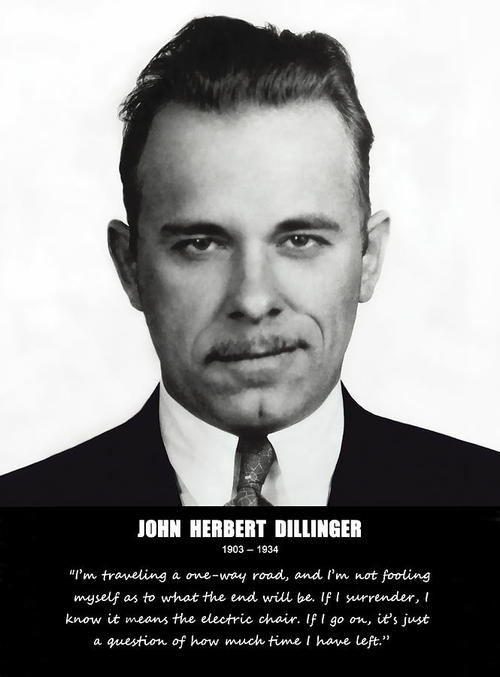
Stranger stop and wish me well,
Just say a prayer for my soul in hell.
I was a good fellow, most people said
Betrayed by a woman dressed in all red.
~ Unknown, Famous Alleyway Poem Found Next To
Where John Dillinger Was Shot & Killed.
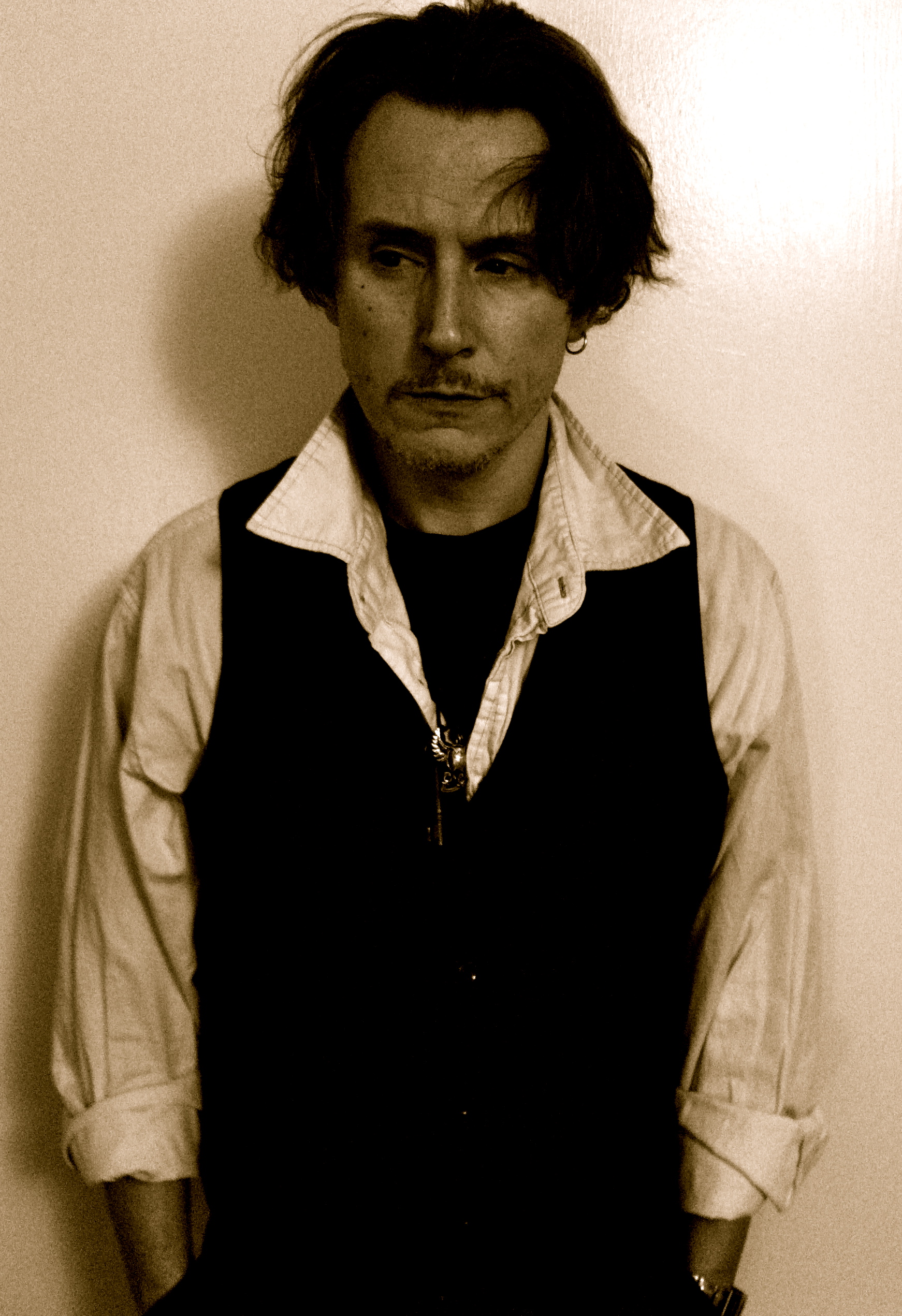
Poet R.M. Engelhardt finds hope in words
Engelhardt expresses hope in power of language
By Amy Biancolli Published 2:11 pm, Wednesday, March 13, 2013
The poems of R.M. Engelhardt don’t assert faith in much. Not religion. Not a society that ignores the plight of the downtrodden while glorifying the rich.
As he writes in “Burn,” a reflection on a homeless man in winter that appears in his 13th book, “The Resurrection Waltz”: “…the george bailey in / this story has no clarence.” “It’s a Wonderful Life” this isn’t.
But the works of this longtime Albany poet holds some faith in a few things. Late-life love, for a start. (“…happiness/That came later/and not sooner“). Smoking, too; he did, after all, title his 2006 book of collected works “The Last Cigarette.” “This is actually part of who I am in general. I’m smoking now as we speak,” he said, chatting on the phone recently.
But he has faith in something else, too: poetry. In “Saint Poem,” he addresses the form itself as a carrier of grace or salvation. “Dear Poem/Saint Poem/I ask you/To please see us through yet another day,” he pleads, coming around to a state of exhausted resignation. Both the faith and the exhaustion pop up throughout “The Resurrection Waltz” (Infinity Publishing), an 82-page tract of succinctly expressed disgruntlement flecked with hope.
“Poetry is very much like a religion. I wouldn’t say my complete religion,” he said. Nevertheless, “It’s the poem that saves you. You write the poem, but it’s catharsis, and what’s what brings you into being — what makes you stable, balanced.”
Engelhardt will read and sign copies of “The Resurrection Waltz,” from 7 to 9 p.m. today at the Book House of Stuyvesant Plaza.
On April 11, he’ll kick off his School of Night open mic, to be held from 7 to 9 p.m. on the second Thursday of each month at the Pearl Street Pub/Dirty Martini Lounge. And then, on April 19, he plans to read at the open mic as part of 2013 Albany Word Fest, set to run from April 14 to 20.
He dates his interest in poetry to childhood, when he composed a myth about a forged Bronze Warrior that wowed his sixth-grade teacher. His appreciation for the power of words never waned. Now a deep-rooted fixture on the poetry landscape, Engelhardt runs open mics, edits a journal (“The Literary Rogue”) and, in 2000, founded the Albany Poets collective (http://www.albanypoets.com). A year later, he started the Word Fest.
“He’s been around for a long, long time, and he’s the one that took me under my wing when I was in high school almost 20 years ago. And he’s always trying to innovate and come up with ways to get new people involved,” said Thom Francis, current president of Albany Poets. As for Engelhardt’s writing, “It’s very personal, and yet sometimes spiritual. And you know, it runs the gamut.”
Engelhardt is not a fan of slams — open mics with a competitive format. “You have people judging the work of new poets, people who have never read before. So the problem is people are just getting out — they’re discovering their authentic voices, and they’re being judged by people. I don’t believe that poetry should be judged.”
He draws his inspiration from a variety of sources. One is the woman in his life, Kali De La Cruz, the photographer (credited as Lona Cygnus), who designed the cover for “The Resurrection Waltz.”
Another is the city of Albany, where his family goes back six generations. After a stint in the Florida Keys some years back, he returned with a newfound appreciation for Albany’s creative vibe.
“It’s the place itself,” he said. “It has a great poetry and literary scene — a great writing scene — it has a great music scene, a great arts scene. And if you can’t find inspiration in that, well, you’re in the wrong place.”
What about those cigarettes? Can someone be a poet without smoking? “If it’s for them, sure,” he said. Then he clarified: “If they’re a nonsmoking poet.”
abiancolli@timesunion.com • 518-454-5439
At a glance R.M. Engelhardt
http://www.timesunion.com/entertainment/article/Poet-R-M-Engelhardt-finds-hope-in-words-4351753.php
What: Reading and signing of “Resurrection Waltz,” new book by Albany poet When: 7-9 p.m. today, March 14
Where: The Book House of Stuyvesant Plaza, 1475 Western Ave. Info: 489-4761;
http://www.bookhouse.indiebound.com
“Life impairs the expression of life. If I were to live a great love, I would never be able to describe it.
I myself do not know if this I that I reveal to you in these serpentine pages really exists or if it is only an aesthetic, false conceit that I made of myself. Yes, that’s the way things are. I live myself aesthetically in another. I sculpted my life like a statue made of material different from my being. Sometimes I do not recognize myself, so external am I to myself and in so purely artistic a fashion did I use my awareness of myself. Who am I behind this unreality? I don’t know. I must be someone. And if I do not seek to live, act, or feel, it is — believe me — so that I don’t distort the established lines of my false personality. I want to be just as I wanted to be and am not. If I were to yield, I would destroy myself. I want to be a work of art, at least of the soul, since I cannot be one of the body. For that reason I sculpted myself in calm and madness and I put myself in a kiln, far from the fresh air and honest lights — where my artificiality, an absurd flower, can flourish in distant beauty.
Sometimes I think about how beautiful it would be to be able, […] my dreams, to create myself a continuous life, succeeding itself, within the flow of entire days, with imaginary guests, with created people, and to go along living, suffering, enjoying this false life. There I would suffer disasters; great joys would shower on me. And nothing of me would be real. But it would all have a proud, serious logic, all of it according to a rhythm of a voluptuous falsity, all of it taking place in a city made from my soul, lost up to the platform alongside a calm train, very far within me, very far… And all dear, inevitable, as in exterior life, but the aesthetics of the Death [?] of the Sun.”
~ Fernando Pessoa – from The Book of Disquiet
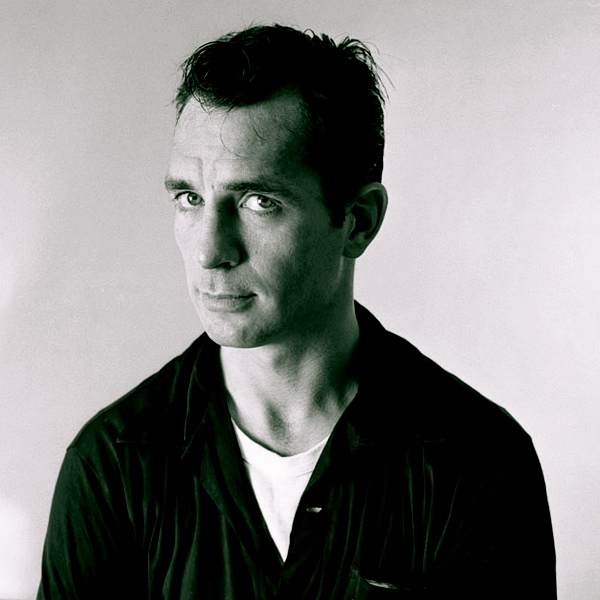
JACK KEROUAC
12 march 1922 – 21 october 1969
A poet is a fellow who
spends his time thinking
about what it is that’s
wrong, and although
he knows he can never quite
find out what this wrong
is, he goes right on
thinking it out and writing
it down.
A poet is a blind optimist.
The world is against him for
many reasons. But the
poet persists. He believes
that he is on the right track,
no matter what any of his
fellow men say. In his
eternal search for truth, the
poet is alone.
He tries to be timeless in a
society built on time.
“Atop an underwood”
~ JACK KEROUAC
http://www.theliteraryrogue.com

Time is the substance from which I am made. Time is a river which carries me along, but I am the river; it is a tiger that devours me, but I am the tiger; it is a fire that consumes me, but I am the fire.”
~ Jorge Luis Borges
Coming into being
By R.M. Engelhardt
Midnight. Domestic violence and hip hop shaking the
windows free of sleep.
Disturbed creatures laughing & singing in the
hallways with the echoes of drunken stupidity.
Jack’s old angels don’t come here anymore, barren of
all love and jazz, exulting no happiness or
joy but only decay. City televisions blare with
overseas casualties, games of hide and go seek with
terrorists & madmen manifesting themselves as heroes. But would
death answer all of your questions?
Wasting all of your days away trying to figure out a
reason why? Small minds put politics into
everything and steal our most sacred lives over & over
again and throughout time, evolution not withstanding.
But beyond all this is the quiet serenity of coming
into being, a place where they can never touch you, or
your dreams.
A place called “peace”
____________
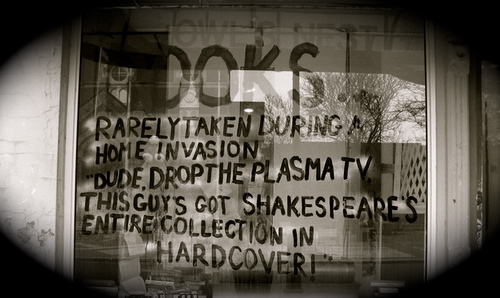
It has often happened to me, at book fairs or in bookstores, that a gentleman approaches me and asks me for a signature. “It is for my wife, my young daughter, or my mother,” he explains. “She is a great reader and loves literature.” Immediately I ask: “And what about you? Don’t you like to read?” The answer is almost always the same: “Of course I like to read, but I am a very busy person.” I have heard this explanation dozens of times: this man and many thousands of men like him have so many important things to do, so many obligations, so many responsibilities in life, that they cannot waste their precious time buried in a novel, a book of poetry, or a literary essay for hours and hours. According to this widespread conception, literature is a dispensable activity, no doubt lofty and useful for cultivating sensitivity and good manners, but essentially an entertainment, an adornment that only people with time for recreation can afford. It is something to fit in between sports, the movies, a game of bridge or chess; and it can be sacrificed without scruple when one “prioritizes” the tasks and the duties that are indispensable in the struggle of life.
It seems clear that literature has become more and more a female activity. In bookstores, at conferences or public readings by writers, and even in university departments dedicated to the humanities, the women clearly outnumber the men. The explanation traditionally given is that middle-class women read more because they work fewer hours than men, and so many of them feel that they can justify more easily than men the time that they devote to fantasy and illusion. I am somewhat allergic to explanations that divide men and women into frozen categories and attribute to each sex its characteristic virtues and shortcomings; but there is no doubt that there are fewer and fewer readers of literature, and that among the saving remnant of readers women predominate.
[…] I am happy for these women, but I feel sorry for these men, and for the millions of human beings who could read but have decided not to read.
”
| ~ | Why Literature, Mario Vargas Llosa |
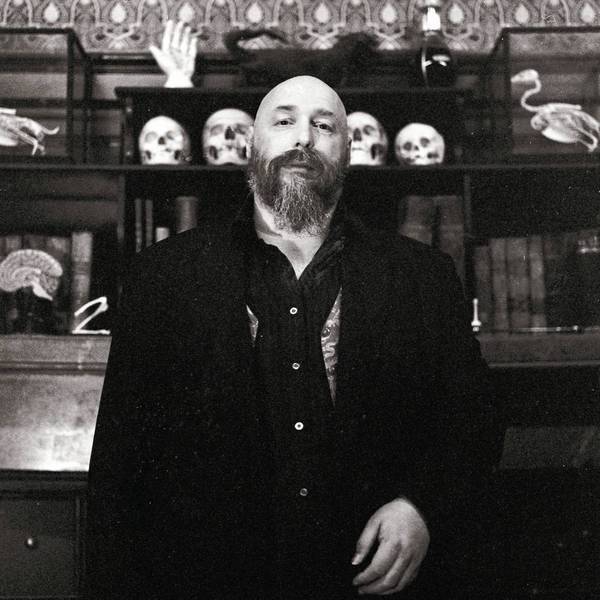
Once in a very blue moon, John Tallow imagined his younger self standing down the timeline from his present life, bare toes curling in teenage beach sand, looking ahead to today and watching his future life collapse in on itself like a dying star. His future life becoming small and dark and dense, its gravity apparently grim and inescapable.
Once in a very blue moon, John Tallow spent some cash on a bottle of vodka and drank it at home within an hour.”
~ Warren Ellis, Gun Machine (2013)
http://articles.latimes.com/2013/jan/10/entertainment/la-ca-jc-warren-ellis-20130113


