http://theliteraryrogue.wordpress.com/2012/10/14/our-literary-rogue-of-the-week-weldon-kees
-
Share this:
-
 “Night, when words fade and things come alive. When the destructive analysis of day is done, and all that is truly important becomes whole and sound again.”
~ Antoine de Saint-Exupéry Share this:
-
The Aesthetics Of Anger
When said the moon to the stars in the sky
A small boy was born upon the day his mother died
Upon his 30th day did also rise
An only son in September.And when he was young and death did follow
Him like a bird and left him hollow
At five & twelve & 13 lives
A trail of tears & unspoken goodbyes
That made him all like quietAnd dead to him-self, inside.
The solitary boy who learned to read big books
Who found all the poets, verses & hooks
And who lived in a mind of his own.And the boy got in trouble, the boy he got in fights
Stood up for the weak ones
And blackened bullies eyes, broke their noses
And bloodied their tries at being the toughest kid
And he never, lost a fight.But it was’nt out of cause that the boy became bad
And it was’nt cause he had ever had
A reason to ever hurt anyone else
At all.It was just all because of the matter, and
The Aesthetics Of AngerAnd the will to hurt all
Those who hurt others, and deserved it as well,
To kill, hurt and keep the inevitable its self,
The oncoming years from coming
To destroy that which one cannot see
Something that comes to both you & me unceasing.Stealing his love, and stealing his friends
One day, at a time.And many years passed
And many things changed
Many lives left
And many hearts came
And softly entered into
The procession of his lifeAnd the boy, now a man finally
Figured out what he was
And was finally meant to be,Not a doctor or a wraith
Or a quiet man of hate, the shaman or a slave to all those
Who want power over the masses or to be the bestFor he was only born to be
hardcore troubadour, a poet
And a man of words incarnate
Using his voice, and words as weapons
To fight & to defeat
All those who would try to
Kill the spirit that dwells withinWith versus
And sarcasm
Truth & history
New images & mythsAnd that’s why he was born.
To be the hand up Mona Lisa’s dress,
To be the heart within your chest
The voice that beats and holds you close
And says the things you want the most
That you can’t say yourself.To become the dark
And become the light
Tween’ both worlds
He’s traveled this night
And wrote & brought back
Something that
Another never couldFor you see? It’s not his fault,
For it was just all because of the matter, and
The Aesthetics Of AngerThat you & the forces that be
Created themselvesThe words, now his weapons
And the boy has been beaten, bloodied,
Stabbed &
Knocked downBut has never lost a fight yet,
And never “Will”
____________
R.M. Engelhardt 2011
Share this:
-
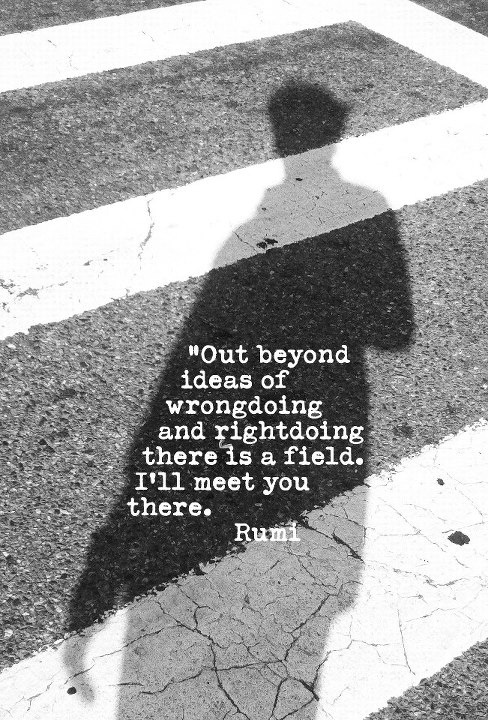
“Make your own Bible. Select and collect all the words and sentences that in all your readings have been to you like the blast of a trumpet.”
~ Emerson
Share this:
-
Share this:
-
Frank Says Read Share this:
-
And now alas yet another poem from my destructions,
You, witness to and here in new flesh and new skin.
The skin of hero, the skin of snake, the skin of monster, the skin of saint all
Gradually and eventually shedding piece by piece living and dying and
Reinventing the world. Poems, photographs, enemies and the catastrophes
Which perish into the void. Paper, undigested words, mute horses and mad
Nostalgic whores, all reality deficient and nocturnally deaf to the unpure beating heart of man and muse. Reason-religion-idealism-theory …and shit.
The perfect and critical butt-flight of monkeys and the cacophony of idle
Crows who sit upon the fences of eternity passing judgment upon our souls
Until we give in…to emptiness.
But let them all know this;
That Jesus came unabridged with two fish and a loaf of bread, more a poetThan a precise carpenter and he fed multitudes
“With hope”
_________________
~ R.M.
Share this:
-
I have spent most of my life (like most people)
avoiding transcendence at all costs, mainly
because the shit hurts. Merely defining transcen-
dence can sometimes be painful. I once heard that
“Transcendence is the act of going through some-
thing”. Ouch. I see plate glass windows and
divorces. Someone else told me that it was “rising
above whatever one encountered in one’s path” but
at this point in my life that smacks of avoidance as
well as elitism of some sort. I am compelled to look
back on years of going through, above, as well as
around my life looking for loopholes to redefine
everything including any and all of the ideas that
I have held close to my heart along the way – Art –
Freedom – Justice – Revolution – Love (a big one) –
Growth – Passion – Parenting (a really big one) –
and I find that for me, for now, transcendence is
about being still enough long enough to know
when it’s time to move on. Fuck me.
Steve Earle
January 2000Share this:
-
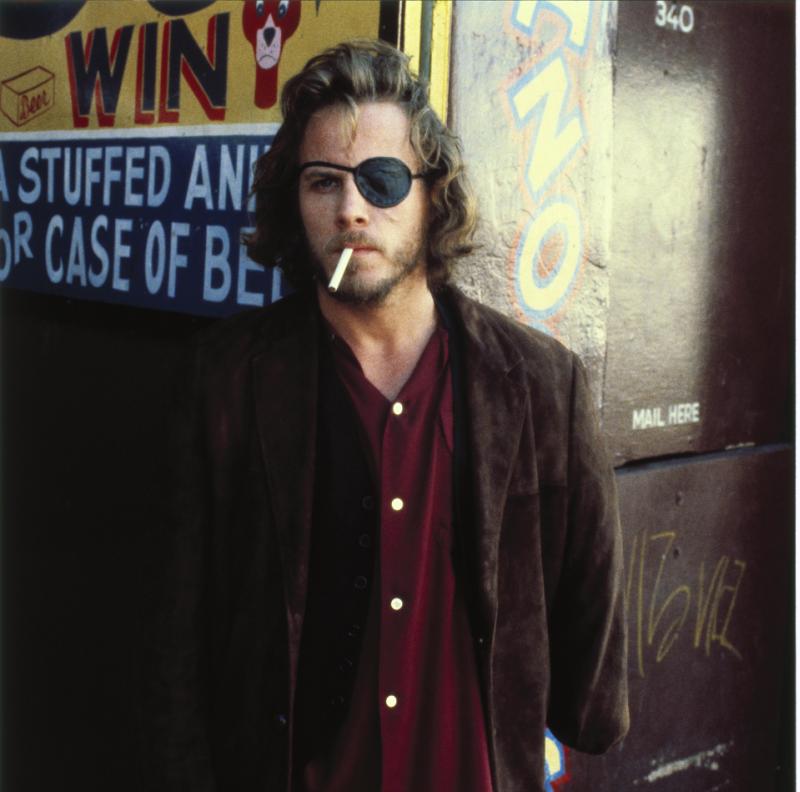
Cutter’s Way emerged at the wrong time, a 70s film in 1981, after Heaven’s Gate, during the death rattle of the ‘Hollywood brats’ era. We were now in Reagan’s America, where odd, ambiguous little films that suggested dark truths about the US of A would become increasingly unwelcome. Its titular character was the wrong kind of Vietnam veteran, a painful reminder of the actual war, alcoholic and bitter and missing a couple of limbs, just before Stallone told us that Vietnam was a brutal wonderland where men went to gain magic powers. In the year beforeRaiders of the Lost Ark, here was a film suggesting that heroism is a murky business where ordinary people end up paying the highest price. Like I said, the wrong time.
Cutter’s Way is a kind of sunset noir, a dark tale bathed in a golden West Coast glow. Santa Barbara is a weathered, frazzled, beautiful town of marinas, polo matches and shabby tourist tat. Cutter, Bone and Mo are clearly at the shabbier end of the social scale, but are able to mingle with the smart set and play with their toys through business and family connections. Jeff Bridges plays ‘golden boy’ Bone, a half-arsed gigolo and yacht salesman hired to look good on deck. John Heard is his friend, the caustic, broken Cutter. Lisa Eichhorn plays Mo, Cutter’s long-suffering lady, fending off Bone’s attentions while Cutter’s out causing trouble.
One rainy night during fiesta Bone sees, and interrupts, what turns out to be the dumping of a body, but does not realise it at the time. He tells the police what he’s witnessed when his car puts him at the scene, after a 17-year-old girl has been found in the trash, and her sister Valerie (Anne Dusenberry) has turned up seeking justice. Typically, Bone just wants to walk away, but Cutter won’t let him, especially after Bone fingers tycoon and Time magazine cover star JJ Cord as the man responsible. Cutter sees personified in Cord all the rich bastards who start the wars poor men fight, whose ‘ass is never on the line’, the kind that lost him an arm, a leg and an eye, and he seizes upon the chance to finally make one of them pay like a man possessed, and with Valerie and the reluctant Bone alongside, a plan is put into action… A plan that just a few notes of Jack Nitzsche’s plaintive, wobbling score will suggest is not going to go well…
Cutter, Bone and Mo are three people who have been together too long and know each other too well. Heard, Bridges and Eichhorn work beautifully together creating an instantly credible chemistry, a three-way relationship that’s tender and complex and disastrous, delivered through Jeffrey Allen Fiskin’s cutting dialogue, dripping with irony and bar room wit. ‘I remember food, people had to eat it during Prohibition,’ Cutter says when Mo brings home groceries instead of booze in another doomed attempt to turn their life around. Heard gets the flashy part, and the lion’s share of great lines, in a dream role, an erudite, charming and abrasive man in a wreck of a body, who still somehow, under all the crap, believes in bravery and heroism and, possibly, America. Quoting Shakespeare and Melville, self-righteously castigating the morality of those around him, but not above leching after Valerie, or using his war wounds to escape arrest after drunkenly trashing a neighbour’s car. Bridges has harder work as a man uncomfortably aware of his many moral failings, but incapable of making the tough decisions that might destroy his easy world. And Lisa Eichhorn as Mo delivers an absolute heartbreaker of a performance as a smart woman who clearly deserves better than this, but is wedded to a train wreck and just can’t go.
Passer’s film makes the personal political. What kind of world is this where the pursuit of justice is left to a sodden mess like Cutter? What kind of goddamn white knight is this? Everything is blurred, we are never sure what exactly Bone saw that night. We are not sure Cutter’s campaign is righteous, whether Cord is a monster, or that the cost will be worth it. For much of the running time we find ourselves nervously siding with Bone: isn’t it better to drop all this hero crap, pretend it’s none of our business and walk away? Cutter’s Way is not perfect: the ending feels abrupt and too blunt, Valerie’s problematic character simply disappears from the narrative before the last reel. But I don’t care. Watching it for the nth time in a screening room, I found myself laughing and crying all over again. Nittzsche’s music (a cousin to his Cuckoo’s Nest score) is wonderful, a woozy commentary on sadness. The photography is suntanned and hazy. But I mainly love the film because I know and love these people, and don’t want bad things to happen to them though I know it must.
It’s 2011 now, 30 years on. Eichhorn moved into quality TV for both the US and UK, Bridges is, in all senses, the Dude, and John Heard is probably best known as the dad in the Home Alone films. Czech émigré Passer continued his wayward career without ever producing anything quite like Cutter again. It’s a one-off, a largely overlooked shining gem. Do yourself a favour.
Mark Stafford
Share this: