Back in the 1930s, a French psychoanalyst and philosopher by the name of Jacques Lacan began his life’s work—an attempt to create the framework by which the human psyche could be analyzed within modern civilization. Such was his influence that Lacanian thought not only left a mark on the field of psychoanalysis but found integration in Marxist thought, most notably with Michel Foucault, Jean Baudrillard and Slavoj Zizek. Like many 19th and 20th century thinkers, Lacan was particularly influenced by George Wilhelm Fredrik Hegel. After failing a physical to enter the French army, Lacan took to studying psychoanalysis. By 1934 Lacan had published “On Paranoiac Psychosis in its Relations to the Personality.” The work did not cause much of a ripple, except in Parisian Surrealist circles.
The psychoanalytical umbilicus between Lacanian psychoanalysis and Surrealism is fairly-well established. A young Lacan published work in the Surrealist review Minotaur, and associated with Andre Breton and the radically-influential novelist and philosopher Georges Bataille(author of “The Story of the Eye”). Lacan, inspired by the Surrealists and their automatic writing, went on to create work that inspired philosophers like Gilles Deleuze (“Capitalism and Schizophrenia, co-written with Felix Guatarri), Foucault (especially his panoptic disciplinary consciousness) and Baudrillard (simulated reality); whose work in turn has helped us better understand the modern, media-driven political world in which we live.
It is true that the Surrealists, only a few years after coalescing, abandoned the idea of pure automatic writing, with Breton, Bataille, Louis Aragon and Phillipe Souppault, amongst others, writing critical Surrealist novels. But the efforts in automatism were vital. Language, ossified by the upper classes and imposed on all throughout history, needed to be liberated by “pure psychic automatism.” Breton may have been the “high priest of Surrealism,” ex-communicating members for trivial transgressions, but he was right about language.
At this moment, I, the writer, and you, the reader, are partaking at a banquet of language that we did not create—a system superimposed on our consciousness. The raw material of our minds is rendered by the symbolic aspect of language, and there is no escaping it; unless one takes psychedelics, descends into madness, attains a hightened non-symbolic spiritual state, or disrupts the historical, psychological superstructure of language.
Breton and the other Surrealists realized that language, its traditional structure (syntax, morphology, semantics and phonology, to varying degrees) and expectations, needed to be destroyed and rebuilt. While the group’s efforts in automatic writing never produced writing as famous as T.S. Elliot “The Wasteland,” for instance, automatism accomplished something far more important: it struck a blow to the politics of language.
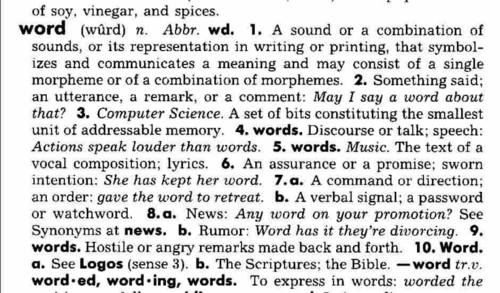
By politics of language, it should be taken to mean the inherited system of thought and communication. We are defined by the words we use, yet we had no part in the construction of the system. This word means such and such. This is how one writes a sentence, a paragraph, an essay, a poem, a novel, a letter, etc. What we think is heavily influenced by the signs and signifiers we use in the form of words (to say nothing of visual cues), and when we attempt to express a thought verbally or through the written word, we must again revert to an imposed system to do so.
It’s helpful to think about language in this way through William S. Burroughs and Brion Gysin’s popularization of the cut-up theory, itself derived from Tristan Tzara’s Dada experiments. Like automatic writing, it was an acknowledgment that traditional language (speaking, writing) were systems of control. ”My basic theory is that the written word was actually a virus,” Burroughs once said, “that made the spoken word possible. The word has not been recognized as a virus because it has achieved a state of stable symbiosis with the host…” In other words, the language virus infects and becomes symbiotic with the human mind. Or to adopt a more Freudian perspective: the conscious mind places the unconscious self under its boot heel.
If language, in a very real way, imposes an order on our thought, then it necessarily limits the way we think about and debate politics. One can see this in the facility with which political operatives (propagandists) use campaign ads to influence voters. In fact, propaganda is the cynical acknowledgment and use of language’s power on the human psyche.
A clever conservative operative and ad agency can craft an ad with one or many sound bytes that paint a liberal as the dread “socialist” or whatever type of “other” is popular at the time. Indeed, “socialist” and “communist” were two of the most popular propagandistic words rising out of the 2012 election cycle’s conservative base. A liberal, on the other hand, can frame a conservative as a selfish brute, when the reality is that a good deal of partisans simply wants government out of their life; they’re manipulated by conservative monied elites into assuming aggressive rhetorical postures.
Many people are rhetorically, psychologically, emotionally and intellectually conditioned to perceive such words and imagery as the quintessence of reality. The world must be a reduction. It must have contours, a shape that is easily visible and defined. We must at all costs be able to make sense of the world as we experience it. Nowhere is this more true than in the world of politics.
Popular fiction, while not propaganda (in most cases), is a function of an established order: something quantifiable and acceptable. How else could James Joyce‘s “Ulysses” have precipitated an obscenity trial when its kaleidoscopic vision gave an immense cinematic, poetic and, one might say, very real vision of a day in the life of Dublin, its characters and environs? The same goes for Comte de Lautreamont’s “Maldoror” and William S. Burroughs’s “Naked Lunch.” Their words create a derangement of the senses (to borrow Rimbaud’s idea), and of the status quo, because the traditional order of language, of the written word, has been almost completely eviscerated.
This, of course, was what the Surrealists were after with automatic writing, with varying degrees of success. To find this deranged destruction of language, look to Andre Breton and Phillipe Soupault’s ‘The Magnetic Fields,” the Surrealist poetry of its members, as well as the short stories and novels of Benjamin Peret, Michel Leiris, Robert Desnos (the king of automatism) and George Limbour.
In Breton and Soupault’s “The Magnetic Fields,” automatic writing yields passages such as:
“The elephant tusks lean on the star-rise steps so that the princess can descend and the bands of musicians step out of the sea. There is nobody but me now on this sonorous scale-platform, the equivocal wavering of which is my harmony. Ah! to descend with one’s hair down and limbs in disarray in the whiteness of the rapids. What cordials do you have at your disposal? I need a third hand, like a bird that the others cannot send to sleep. I need to hear dizzy gallopings in the pampas. I have so much sand in my ears, moreover, that I do not know how I shall learn your language. At least, the contact-rings are threaded well enough away under women’s skins, and do not too many innocent little waves weep over the softness of beds? … Reduce speed. So long as I don’t lose courage at the last moment.”
There, Breton and Soupault unleash a virus into the existing virus of language. All personal history with language is destroyed as we grasp for meaning. Our conscious, filter-obsessed mind wants clarity, but there is none to be had—or very little at least.
Leiris explored the unconscious in his 1928 novel “Aurora,” and the result is fantastically surreal prose like the following:
…in order to see the whole history of the world reflected in its absolute reality on the frosted glass, the pure and bare inner surface, when the woman, rising with a sudden but graceful movement, having smoothed out the creases in her crumpled skirt with little touches of her slender hand, took three steps in the direction of a lawn and solemnly greeted the grape harvests of the future which were coming towards her in the form of hailstones. Then I heard the word “Aurora,” whispered in a gentle voice softer than despairing flesh…
Leiris tantalizes the reader with moments of clarity to serve as a foothold for reality, but then pulls the rug out from under us. It’s automatic writing infused with more traditional prose, but just as capable of causing derangement of the senses.
In this world of constant media bombardment, automatic writing takes on a new form of urgency. For the Surrealists it was an answer to the absurd chaos of World War I and the failure of rationalism. Automatic writing, like Dada, was at bottom political—an acknowledgment that bourgeois democratic politics were incredibly destructive. The Surrealists may have failed in creating a new and sustained subversive reality with automatic writing, but they provided for all subsequent generations a blueprint of how to liberate the mind.
Almost a century on we are circling back to something like the Surrealists’ post-WWI reality. The collective hallucination is now broken and everyone is trying desperately to reconstitute reality through politics, media and capitalism (in its perverse form). Order is again being imposed with the word.
A little writing and reading of automatic texts might be just the cure. A nice mental palette cleanser.