R.M. ENGELHARDT

Poet Writer Author Albany NY

  • DangujeA MECHANICAL ANGEL

    A mechanical angel’s duties are not difficult: Govern lightning bolts, bring bread and wine, Watch through the window how flames climb the walls, Talk with street lamps about old times. A mechanical angel’s duties are not difficult: Feed chimeras in the tower every hundred years, Step softly so the metal will not clang, Cloak freezing caryatids with fog. A mechanical angel’s duties are difficult: Blocade the door, do not let Death in, And if she enters, show her a sleeping brother And convince her he doesn’t have a soul.
    Translated by Jonas Zdanys


    What is the limit of human endurance, what tools do we have to fight against the forces that seek to overwhelm us – these are the impossible questions the Lithuanian poet Henrikas Radauskas once tried to answer. Radauskas is not read by anyone in the English-speaking world, and in truth he is now probably unknown to anyone outside his homeland. Yet his work is an example of the greatest determination, deserving to be read alongside that of Akhmatova and Mandelstam and the countless other poets who by intense labor sought out a measure of life in the midst of the unspeakable.

    Born in 1910 in the city of Panevėžys in central Lithuania, the entirety of Radauskas’ life was determined by years of upheaval and devastation. As a youth he absorbed the writings of the French Romantics, the Russian symbolists, the Acmeists, the Polish poet Julian Tuwim; by the year of his death in 1970, had spent time as a teacher, a radio-announcer, a secretary, a manual laborer, and a librarian in Russia, Germany, Baltimore, Chicago, and Washington D.C. In 1946 he escaped from Soviet-occupied Berlin only to find himself in a displaced-persons camp where, under conditions of intense confinement, he resumed the artistic project he had been forced by war to set aside.

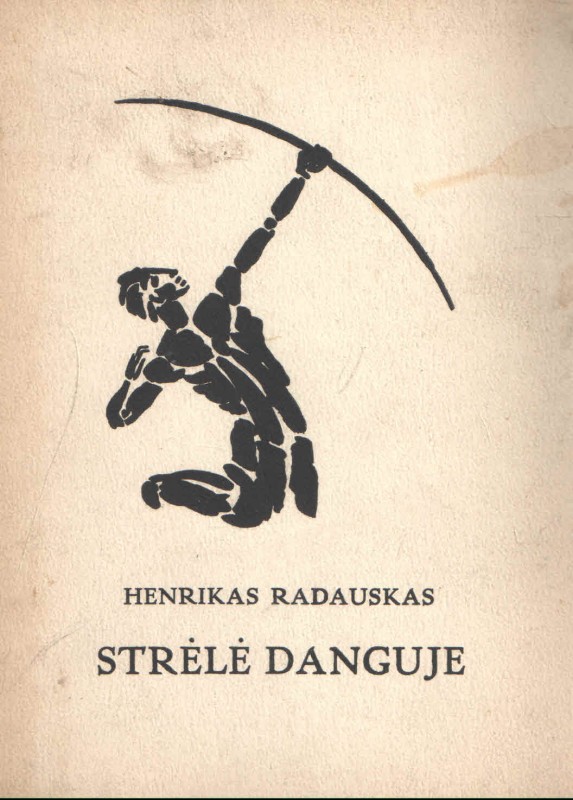
    Four small volumes of poetry were published in Radauskas’ lifetime: Fontanas (The Fountain, 1935), Strėlė danguje (Arrow in the Sky, 1950), Žiemos daina (Winter Song, 1955), and Žaibai ir vėjai (Lightnings and Winds, 1965) and there is a notable fifteen-year gap between his first collection, made while still in Lithuania, and his second, produced by the émigré press abroad. To date only a single, slim collection has ever been available in the U.S., published by Wesleyan University Press in 1986 as part of a series under the title Chimeras In the Tower. The selections in that volume are divided between verse and prose and are frequently short, less than a page.

    The entirety of a poem called “Winter and Summer” is this:

    Everything was so warm and round:
    Heaven and the sun, pears and grapes,
    And the breasts of a young girl
    Who waited for love in the shade of a cloud.

    Autumn crushed the weeping grapes,
    Winter strewed the fields with lime,
    And the sun, dead bird of paradise,
    Falls through my window like a stone.

    Another, entitled “Speed” reads:

    Pouring time and space into one straightaway, shivering in a great wind, speed, having smashed its steel hand across the landscape, sees that trees and poles, eyes shut with fear, fly screaming toward their inevitable destiny.

    In both of these poems are the techniques that recur throughout Radauskas’ work: an aggressive, palpable sense of imagery, coupled with the description of a force beyond the reach of human comprehension. The reader finds little that is overtly specific, nothing unique – no places, houses, families, or towns are mentioned – everything presented in a simple, straightforward language that seems to strip the parts of things down to the element itself. And yet, despite this simplicity, everything is quite suddenly thrown on its end.

    A poem titled “A Mechanical Angel,” presents a seemingly familiar myth:

    A mechanical angel’s duties are not difficult:
    Feed chimeras in the tower every hundred years,
    Step softly so the metal does not clang,
    Cloak freezing caryatids with fog.

    That is immediately contradicted:

    A mechanical angel’s duties are difficult:
    Blockade the door, do not let Death in,
    And if she enters, show her a sleeping brother,
    And convince her he doesn’t have a soul.

    This is a world in which the subjects are as condemned as the souls in Purgatory. That which is familiar is forever and inevitably subjected to a destabilizing paradox, as if the universe, being infinite, cannot yet be entirely determined.

    In an essay, Radauskas’ translator Jonas Zdanys names his subject’ approach “applied aestheticism” – an attempt by the poet, in his view, to fashion a world beyond the reach of his terrible history and pain and freed from the sense of his world’s destruction. Zdanys uses as an example of purpose the poem “Arrow in the Sky”

    I am an arrow that a child shot through
    An apple tree in bloom beside the sea;
    A cloud of apple blossoms, like a swan,
    Has shimmered down and landed on a wave;
    The child is wondering, he cannot tell
    The blossoms from the foam.I am an arrow that a hunter shot
    To hit an eagle that was flying by;
    For all his strength and youth, he missed the bird,
    Wounding instead the old enormous sun
    And flooding all the twilight with its blood;
    And now the day has died.I am an arrow that was shot at night
    By a crazed soldier from a fort besieged
    To plead for help from mighty heaven, but
    Not having spotted God, the arrow still
    Wanders among the frigid constellations,
    Not daring to return.

    Though Zdanys’ assessment overlooks, I think, the presence of destruction, he is perceptive in noting that Radauskas’ poems are otherwise not totally preoccupied with despair. They are not like those of Trakl or Baudelaire – there is still a sense, a very slight sense, that the future can be left unwritten (which is to say that the inverse might also be true: if the apocalypse is real, it may have already happened).

    It is a sense of reflection after ending. Radauskas writes of eloquently in the poem “Muse”:

    The dressmaker muse from Denis’s painting
    Puts her sewing on the bench, rises,
    Walks down an empty street of summer
    Yellowed like a Chinese face.
    The checkered dress begins to climb the stairs,
    And beneath her feet an oak voice
    Scans running words into iambs.She goes through the heavy sleeping door
    Like the wind and suddenly
    Grows like a statue in the room.
    Seeing the blind stone face
    The children scream and start to run,
    But she throws the children out the window,
    And the geranium and the canary,
    And the infants, flapping their wings,
    Set down like angels in the square.
    The flower sings in the street like a bird
    And the canary sprouts
    A bright yellow blossom. And the stone
    Hands the man a pen and a notebook
    And languidly begins to dictate.

    “The stone/Hands the man a pen and a notebook/And languidly begins to dictate.” There is no better personification for the unreasonableness of art.

    In his lifetime Radauskas translated into Lithuanian the writers Martin du Gard, Thomas Mann, Stefan Zweig, Verlaine, Heine, Goethe, and Achmatova. His poems have been translated into English, Latvian, Estonian, Finnish, Polish, and German.

    Readers unfamiliar with mid-century Lithuanian poetry might find the introduction to Chimeras In the Tower useful: Zdanys provides a summary of the history of the Lithuanian language and its idiosyncrasies in syntax.

    Some of the poems of Chimeras have been included alongside uncollected poems here

    Source: 

  • smoker

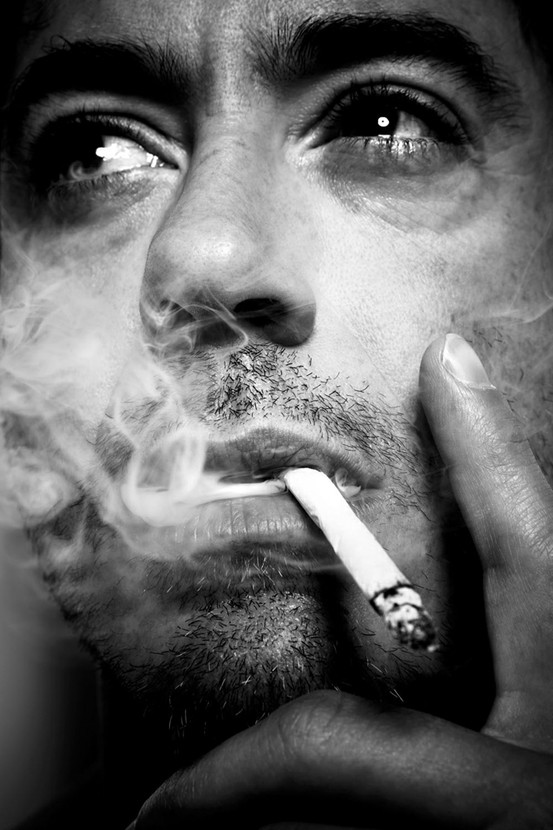
    “Nicotine and alcohol embraced in my system like long-parted siblings,

    grateful to me for reuniting them.”


    ~ Glen Duncan

    _____________

  • Apr 04, 2013 by Thom Francis | School of Night
    TheSchoolOfNight
    http://www.newversemovement.com

    On Tuesday we told you about the upcoming Frequency North reading on April 11 and how Thursday nights are very busy in the poetry world here in Albany. Well, there is even more going on next Thursday evening as R.M. Engelhardt is resurrecting the School of Night poetry open mic at the Pearl Street Pub in downtown Albany.

    This open mic series has come and gone a few times over the years. Before Nitty Gritty Slam was at Valentine’s, the School of Night was the monthly poetry reading at the club. After leaving the New Scotland Ave. venue, the series moved to a couple other places in the city including The Fuze Box, Ballingers (now the City Beer Hall), and Red Square. Most recently Rob was the host of the Saint Poem Reading Series at the UAG Gallery on Lark Street.

    We sat down with Engelhardt to get more information about why he is starting the series up again, what makes the School of Night so different from the other mics in the area, and why is moving downtown to Pearl Street.

    It’s in the air, things … the feel of poetry is changing and everything is in a way for the 21st century just starting to change. When I was hosting “Saint Poem” at the UAG something was missing and it somehow didn’t feel right. I thought that the location was helpful on Lark Street but it wasn’t getting enough public notice. Granted, poetry readings, open mics here in Albany are plentiful but in order to create a successful one you need the right place and the right atmosphere to truly bring it to into life. The Pearl Street Pub-Dirty Martini Lounge has that right feeling … it’s the right place for it downtown. The School Of Night has always been more, was always more than just a open mic or poetry reading but symbolic of exactly the people & the original purpose the group was formed for by Kit Marlowe, Doctor Dee and Sir Walter Raleigh in the late 1500s England. To share words & ideas, free verse & free thought. It has an air of mystery that surrounds it as well as an air of decadence. It has the imagery for poetry & writing of all kinds read in a dark noir place where the mood is perfect for it and captures the imagination. Back in the late 90’s Valentines nightclub fit that mood perfectly, as does the readings new venue.

    Downtown Albany needs more events like this. Bringing poets & writers down to a great location and perhaps to be in an area is historic and a bit mythic. The Dirty Martini Lounge is right near The Kenmore Hotel where jazz legends used to play back in the day (The Rain-bo Room). And known gangster Jack “Legs” Diamond frequented the hotel and had partied at the Rain-Bo the night of his death. The Hotel features prominently in many of William Kennedy’s books, including his novel Legs about the life of Jack Diamond. Downtown Albany and the Pearl Street area are far cooler than most people are even aware of.

    The time to bring back SON is now. Poetry seems to be both locally and internationally beginning to steer in a new and perhaps different direction. It’s looking for it’s place with new poets and writers of all styles & forms finding their voices and excited about creating poems, books and even plays. I hate labels but there appears to be only what I can call a “new movement of verse” coming into being with a mix of forms that is everything from neo-romanticism, free verse slam & new formalism as parts of it. Albany has always been from the days of readings at the QE2 a place where all kinds of writers & poets have gathered and read and I am excited to be hosting and resurrecting such a gathering where poets can speak their art. We also here in Albany believe in supporting our writers and venues and we have all worked very hard to do just that and have achieved it.

    This is going to be a very cool monthly open mic which will be just that. A simple open mic to step up to and read your work. Eventually there will be featured poets as well as connected events with the Literary Rogue Magazine so keep an eye out for those events too. The School Of Night website is www.newversemovement.com and we hope that poets and writers of all styles and from all walks of life will join us at The Pearl Street Pub & Dirty Martini Lounge on the second Thursday night of each month.

    Now all we need is our saxophone and stand up bass players back and we will create even more magic.

    The School of Night will be happening each month on the 2nd Thursday, starting at 7:30pm, at the Pearl Street Pub / Dirty Martini Lounge (1 Steuben Place Albany). R.M. is asking for a $3.00 donation.

  •  

    image


    In celebration of National Poetry Month, Albany Poets is proud to present the 2013 Albany Word Fest featuring the poetry and spoken word of upstate New York.  This year’s event will take place on Sunday, April 14 – Saturday, April 20, 2013.


    “What a great way to celebrate National Poetry Month right here in Albany. With a full week of poetry and spoken word, there is something for everyone.” Thom Francis, Albany Poets President, said, “Whether you would like to take in a featured performance, celebrate the launch of a new, local literary journal, attend a regional poetry slam, or be part of one of the largest annual open mics in the area, the Albany Word Fest is the place for you.”


    Avery Stempel, Albany Poets board member, adds, “Word Fest is a celebration of spoken word spanning a full week of events that incorporate the diverse forms of expression ranging from impromptu skits to rehearsed and choreographed slams.  Poets, philosophers, performers: all are welcome in this growing community of Albany writers.  I am excited to be a part of the team coordinating the festivities this year!”

    The week will kick-off with the launch of Albany Poets’ brand new literary journal, Up The River. Editors Jill Crammond and Keith Spencer have been culling through hundreds of submissions and will debut their selections for the first issue on Sunday, April 14 at McGeary’s. The evening will also feature performances by some of the poets published.

    On Monday, April 15 we head to the UAG Gallery on Lark Street for a night of poetry and spoken word from Poets Against Fracking featuring Band of Bards, a community of Binghamton area writers, artists, and activists who have turned their talents toward helping to preserve their community against the threat of hydraulic fracture gas drilling in New York State and beyond.

    Also on Monday night, Jill Crammond will be hosting an open mic for students in grades 5 – 12 at the Bethlehem Children’s School in Slingerlands. This will be a great opportunity for young poets and writers to share their work with others.

    On Tuesday, April 16 the festival continues with the Nitty Gritty Slam at Valentines. For the Word Fest edition of NGS, Mojavi and Thom Francis will present the first ever Haiku Battle. This long awaited event will finally make its Albany debut on the Nitty Gritty stage.

    For Wednesday night, April 17, the Word Fest heads over to The Linda – WAMC’s Performing Arts Studio on Central Ave for a screening of the film Louder Than A Bomb, “a film about passion, competition, teamwork, and trust. It’s about the joy of being young, and the pain of growing up. It’s about speaking out, making noise, and finding your voice. It also just happens to be about poetry.”

    Thursday, the poetry comes back to the Social Justice Center with the Third Thursday Poetry Night hosted by Dan Wilcox. This monthly poetry series welcomes poets to step up to the mic and share their work along with featured performers from the College of Saint Rose.

    Friday night features two poetry events with the annual Word Fest Open Mic taking place at the UAG Gallery on Lark Street while UGT will be happening at The Linda on Central Ave.

    This year Albany Poets is going back to a familiar place for the Word Fest Open Mic. We are returning to the UAG Gallery on Lark Street for this annual Word Fest tradition. The UAG has hosted the Open Mic five times in the past (2006 – 2010) and it is great to be back home for the 2013 Word Fest.

    Poets who wish to participate in the open mic can sign up online by going to the signup pageuntil Sunday, April 14.  Performers will also have a limited opportunity to sign up at the event itself.  Each poet will have 10 minutes to share their work. The open mic is open to all poets and spoken word artists with no style or content restrictions.

    Meanwhile, right up Central Avenue, at The Linda, Urban Guerilla Theatre will be presenting the second Skit Happens show. UGT President Mojavi explains, “ ‘Skit Happens, Too’ is an eclectic blend of poetry, comedy and skits. UGT is dedicated to bringing you funny, incredible performances and even crazier skits. We continue to bring you the best in poetry, comedy and performance as part of the 2013 Albany Word Fest.”

    Finally on Saturday, April 20, the Word Fest comes to an end with the first ever Word Fest Invitational Slam at Valentine’s starting at 6:00pm. Albany Poets, Frequency North, and Urban Guerilla Theatre are proud to welcome six teams from all over the Northeast to compete in this event. Admission for this event at Valentine’s is $10.00 in advance / $12.00 at the door. This event is 18+ (21+ to drink) with a picture ID required. Tickets will be available online beginning on March 14.

    Additionally, all throughout the week, Albany Poets will be publishing local poetry on their website as part of the Word Fest Online Open Mic. Poets who wish to participate are encouraged to send their poems to albanypoets+submissions@gmail.com with “Online Open Mic” in the subject line, starting Sunday, April 7.

    The 2013 Albany Word Fest is sponsored by Albany Poets, Hudson Valley Writers Guild, Frequency North, Urban Guerrilla Theatre, Valentines, McGeary’s,Upstate Artists Guild, and the very generous donations of supporters of the arts in upstate New York including Matt Galletta, Dan Wilcox, Howard Kogan, Kenneth Salzmann, and Bob Sharkey.

    Latest Word Fest News

    2013 Albany Word Fest – The Word Fest Kick Off Party and Launch of Up The River on Sunday, April 14
    April 3, 2013 2:36:40 PM EDT

    Getting Closer… Two Weeks Until the 2013 Albany Word Fest
    April 2, 2013 10:44:56 AM EDT

    2013 Albany Word Fest – Poets Against Fracking featuring Band of Bards on Monday, April 15
    March 29, 2013 9:55:17 AM EDT

    2013 Albany Word Fest News – New Events, New Features, and How You Can Help
    March 14, 2013 10:26:52 AM EDT

    More Word Fest News

    The Albany Word Fest is © 2013 Albany Poets. All Rights Reserved.


  • Greek


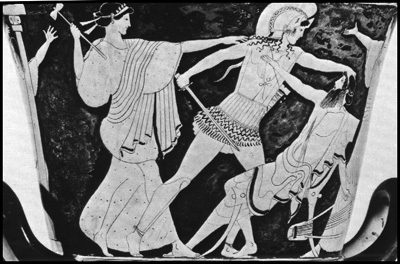
    In his grief-stricken dreams
    he sees her, joy and pain.
    He reaches out to touch,
    but her figure slips through
    his desperate arms
    and is gone, lost forever,
    drifting on the wings of sleep.

    ~ Aeschylus, Agamemnon

  • jcash.jpg
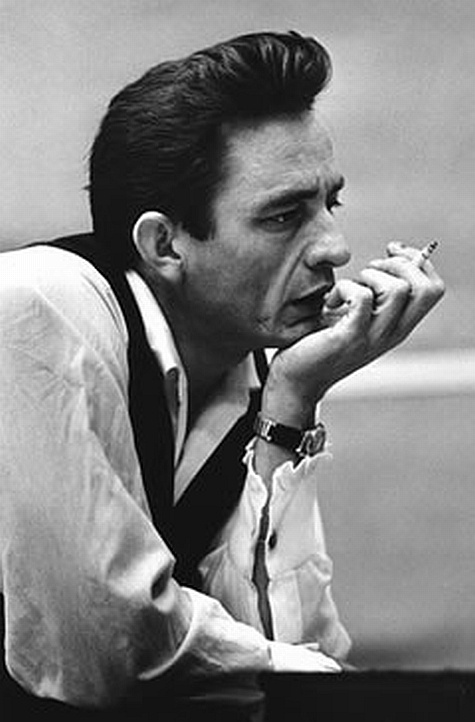
    In Your Mind In your mind
    one foot on Jacob’s ladder and one foot in the fire
    and it all goes down in your mind
    Livin’ at the bottom of the stairs of life
    never a smile knockin’ on your door
    the air is blue and so are you
    prehistoric monsters on the floor
    Last verse of your last song
    and God don’t hear dead men
    the end of the line is in your mind
    then you’ll be stayin’ in
    In your mind In your mind
    Bone for bone and skin for skin
    eye for eye and tooth for tooth
    heart for heart and soul for soul
    somebody said “What is truth”?
    Lock it up and close it down
    the sound of mournin’ like a dove
    high beyond the rattlin’ roar
    lookin’ to the face of love
    [chorus:] In your mind In your mind
    it all goes down in your mind
    one foot on Jacob’s ladder and one foot in the fire
    and it all goes down in your mind
    In your mind In your mind
    Sunday words are back again
    and you eat your fundamentalist pie
    but just a piece you understand
    you get the rest up in the sky
    Praise and glory, wounded angels
    shufflin’ ‘round the room
    eternity is down the hall
    and you sit there bendin’ spoons
    In your mind In your mind
    Father, Son, and Holy Ghost
    sacrificial drops of pain
    on a silver plated cross
    sanctification on a chain
    Thay say redemption draweth nigh
    the storms of silence from above
    stop your ears and close your eyes
    and try to find the face of love

    ~ Johnny Cash

  • Blank

    “I also concluded that so many people who drifted into the writing of poetry didn’t have very interesting minds: a family member dies, they saw a tree of unusual shape, a little-known Matisse painting excited them, so they take to their computers and trivialize the subject or experience by encasing it in a more or less complex contraption of verbal self-absorption currently called a poem.”

    ~ The Wall Street Journal

    Joseph Epstein-The Poetic Justice on April 1

    _________________

    The Poetic Justice of April 1

    When was the last time you bought a contemporary book of verse?

    Yet the stuff still gets published, prizes awarded.

    By JOSEPH EPSTEIN

    April, the poet told us, is the cruelest month. As it happens, it is also National Poetry Month, which makes its debut on April Fool’s Day. And the biggest fools of all may well be those who believe that contemporary poetry matters in the least except to those who, against a high barbed-wire wall of national indifference, continue solemnly to churn it out.

    Poetry in our day is in the same condition as verse drama at the beginning of the last century: an archaic practice, a dead genre, a done deal. We still have people playing the role of major poets, but only because the world seems to require a few people to play the role: “In art, in medicine, in fashion we must have new names,” wrote Marcel Proust. We know the names: Seamus Heaney, Derek Walcott, John Ashbery, Adrienne Rich and a few others. It is only their poetry that we don’t know, or can’t be brought to care about.

    In the room the poets come and go, / muttering, yo!, / where’s the prize and what’s the dough? But if I ask a literary gent or lady to quote me a single line or phrase from any of our putative major poets, they cannot do it. The magazines—the TLS, the New Yorker, Poetry and the rest—go on publishing the stuff, prize committees meet to issue awards and descant on the importance of poetry to civilization, but it is all finally an intramural game.

    Like so many people of my rapidly diminishing generation, I walk around with lines and entire passages from the poetry of W.B. Yeats, T. S. Eliot, Robert Frost, Wallace Stevens, e.e. cummings, and others rattling around pleasantly in my head. But nearly all the poetry written since the years those poets wrote doesn’t register, resonate, ring, do any of the elevating things that poetry is supposed to, and once indeed did, do.

    When was the last time you bought a book of verse by a contemporary poet? My guess is around the same time that I did—the 12th of Never, if a precise date is wanted. And this tends to be true of genuine literateurs, lovers of language and its artful deployment. W.H. Auden said that if one were born later than the 1890s one had no chance to become a major poet. (He was born in 1907 but somehow got his bulky body over the bar.) Philip Larkin, who may not have been a major poet, at least created some memorable but not necessarily newspaper-publishable lines and phrases: “They [you-know-what] you up, your mum and dad.”

    But otherwise the poetry game is over, kaput, fini, time, gentlemen, time. This even though reams and reams of the stuff gets published, prizes awarded, poets laureate appointed to the resounding boredom of all but those who either write or teach poetry (usually one and the same people). Years ago I wrote an essay on this subject called “Who Killed Poetry?,” which stirred up beehives of poets in protest. I suggested that the academicization of poetry did a lot to help kill it; I also concluded that too much poetry was in production, with Gresham’s Law relentlessly at work, in this instance the crappy driving out the second-rate. I also concluded that so many people who drifted into the writing of poetry didn’t have very interesting minds: a family member dies, they saw a tree of unusual shape, a little-known Matisse painting excited them, so they take to their computers and trivialize the subject or experience by encasing it in a more or less complex contraption of verbal self-absorption currently called a poem.

    I now wonder if quite as considerable a reason for the death of poetry is that the international attention span has been much reduced by so many fresh distractions, leaving fewer and fewer people who have the patience and intellectual curiosity to work out the rich complexity of a well-wrought poem—that is, if anyone is around who could actually produce one. My main point is that if any of your children or grandchildren comes to you and declares a wish to become a poet, send that child directly off to bed without any dinner, and return to your place on the couch before the television set.

    Mr. Epstein is the author, with Frederic Raphael, of “Distant Intimacy: A Friendship in the Age of the Internet,” published this week by Yale University Press. This op-ed is based in part on the book.

    A version of this article appeared April 1, 2013, on page A13 in the U.S. edition of The Wall Street Journal, with the headline: The Poetic Justice of April 1.

    http://online.wsj.com/article/SB10001424127887323296504578394062941426822.html

  • since feeling is first
    who pays any attention
    to the syntax of things
    will never wholly kiss you;

    wholly to be a fool
    while Spring is in the world

    my blood approves,
    and kisses are better fate
    than wisdom
    lady i swear by all flowers. Don’t cry
    —the best gesture of my brain is less than
    your eyelids’ flutter which says

    we are for each other: then
    laugh, leaning back in my arms
    for life’s not a paragraph

    And death i think is no parenthesis’

    ~ E.E. Cummings (1926)
  • WELCOME TO NATIONAL POETRY MONTH 2013 !
    WELCOME TO NATIONAL POETRY MONTH 2013 !
  • slam boxers

    Poetry is dying. Actually, it’s pretty dead already for all intents and purposes and the rise of performance poetry slams is doing nothing to help matters. I know, I used to be a performance poet.

    The first poetry slam competition was held in Chicago in 1984. Named after a brutal wrestling move, the slam saw poets perform original pieces for a live audience who voted for a winner. The early slam poets railed against what they pejoratively referred to as page poetry. They demanded, along with Bukowski, that poetry “have guts”. They wanted to democratise poetry and drag it from the academic ivory tower.

    But there never was an ivory tower. There was no cabal of posh people who had purposely made poetry unintelligible. Poetry has always been words on a page, open to anyone. The politicisation of art and the drawing of sectarian lines continues to damage poetry to this today.

    Like sipping a fine wine, reading poetry cannot be rushed. It reveals its pleasures over time, rewarding the careful reader with something new and beautiful each time. It runs bang against the grain of our quick-fix culture. It is already a lost discipline. I have taught poetry to hundreds of children aged seven to 14 and not one of them could name me a poet beyond Shakespeare.

    A further nail in the coffin is the rise of poetry slams. I have performed at many slams and the audience is almost always half drunk and if you want to win you have to pitch your poem pretty low. The result is a scene rife with the poetic equivalent of nob jokes – and plenty of actual nob jokes.

    The only division in poetry is between those people willing to take the time to read it and those who will not. When Emily Dickinson said only “the fairest” may enter her house of “possibility”, she wasn’t being elitist –she was putting up a barrier against the lazy.

    Most slam poems are not strong enough to be published in even minor poetry journals. And that’s fine; maybe they don’t want to be. Then why attack the poems that do? It’s like there is an oedipal urge to kill the art that made it. We cannot allow slam poetry to replace the role poetry plays in our lives. The threat is there.

    There is a school of thought that thinks slams are the answer. The slams I have attended have little to do with poetry and everything to do with a Darwinian death match where the audience picks the winner like some blood-crazed Circus Maximus mob.

    Poetry, like all art, whispers its message and we must learn to slow down and take the time to hear it.

    ~ NATHAN A THOMPSON  

    FRIDAY 01 FEBRUARY 2013

    http://www.independent.co.uk/arts-entertainment/art/features/poetry-slams-do-nothing-to-help-the-art-form-survive-8475599.html